What Defines Holmby Hills Estate Architecture Today
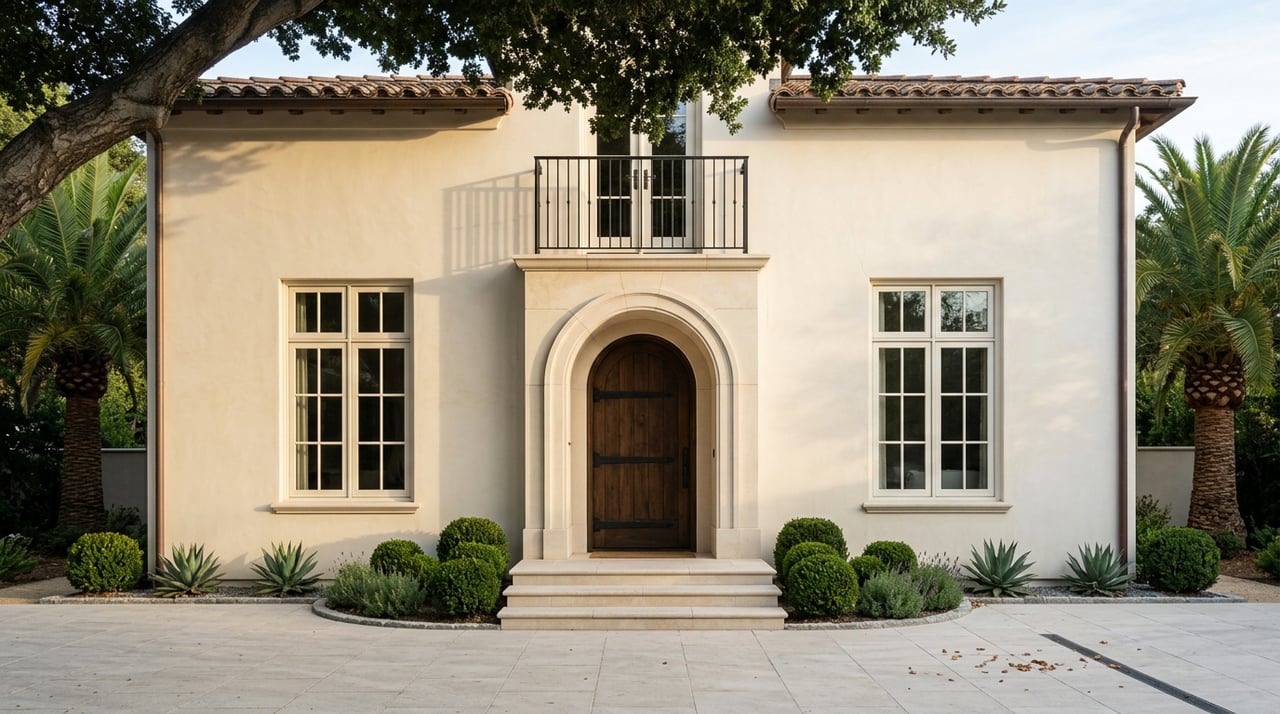
If you have ever driven past Holmby Hills and wondered what gives the neighborhood its lasting mystique, the answer starts with architecture. In 90077, the built environment tells a layered story of planning, taste, status, and reinvention over more than a century. Whether you are studying the area as a buyer, seller, or simply a lover of Los Angeles design, understanding Holmby Hills’ architectural heritage can give you a clearer view of what makes this enclave so distinct. Let’s dive in.
Holmby Hills was not planned as a typical early Los Angeles neighborhood. According to SurveyLA materials, Arthur Letts Sr. purchased 400 acres of the former Wolfskill Ranch in 1919, and by 1925 the Janss Investment Company had laid out the area with streets, sewer lines, streetlamps, underground utilities, bridle trails, and parks.
From the start, the neighborhood was designed around space and privacy. The smallest lots were set at three-quarters of an acre, which established a low-density estate pattern that still shapes how Holmby Hills is understood today.
Early properties often went far beyond a main house. SurveyLA describes many of them as full compounds, with guest and pool houses, tennis courts, swimming pools, extensive gardens, and separate servants’ quarters.
Even as individual homes have changed over time, the original planning framework remains a major part of Holmby Hills’ identity. Consistent setbacks, mature landscaping, street trees, and scenic siting helped create a sense of scale and calm that set the neighborhood apart from denser parts of Los Angeles.
That original layout also explains why Holmby Hills feels more like a collection of private estates than a conventional residential grid. The neighborhood was built to emphasize arrival, discretion, and generous land, and that pattern continues to influence buyer expectations in the area.
SurveyLA places Holmby Hills within the broader Period Revival landscape of Los Angeles. The neighborhood saw much of its early architectural development in the 1920s and 1930s, with 1928 noted as a high point for styles such as Mediterranean and Indigenous Revival.
In Holmby Hills, however, the overall picture is more eclectic than any single style label suggests. The area became known for a mix of Spanish Colonial Revival, Mediterranean Revival, American Colonial Revival, Monterey Revival, Tudor Revival, French Revival, and related historicist styles.
This range is one reason the neighborhood remains visually compelling. Rather than repeating one uniform look, Holmby Hills developed as a curated collection of large estates that shared planning principles while expressing different architectural traditions.
If you are looking at Holmby Hills homes today, several architectural cues help explain the neighborhood’s heritage.
Mediterranean and Spanish Colonial Revival homes helped define the area’s prewar glamour. These residences often contributed to the neighborhood’s romantic, resort-like image during the height of estate development in Los Angeles.
French Revival architecture became another major part of Holmby Hills’ design story. Steep rooflines, dormers, chimneys, brick cladding, and French doors all appear in notable estates tied to this tradition.
Tudor Revival and Elizabethan influences brought a more formal, old-world expression to parts of the neighborhood. These styles added depth to Holmby Hills’ architectural mix and reinforced its identity as an enclave of highly individualized estates.
American Colonial Revival and Monterey Revival homes also contributed to the area’s varied streetscape. Together, these styles show how Holmby Hills drew from a wide historic vocabulary while maintaining a consistent estate-scale setting.
A few well-known properties illustrate how Holmby Hills evolved across generations.
The Arthur Letts Jr. House, later associated with the Playboy Mansion, is a 1927 Elizabethan residence designed by Estep and Kelly. PCAD records note that the estate later included features such as a guesthouse, grotto, swimming pool, gym, theater, tennis court, and even a small zoo.
That scale makes it one of the clearest examples of the compound model that shaped early Holmby Hills. It was not simply a house on a large lot. It was an entire private estate environment.
Owlwood Estate at 141 South Carolwood Drive, designed by Robert D. Farquhar in 1936 to 1937, reflects the neighborhood’s appetite for grand revival architecture. The property has been described as a 10-acre compound centered on an Italian Revival-style mansion of more than 12,200 square feet.
Its importance lies not just in size, but in how clearly it expresses the prewar ambition of Holmby Hills. It stands as a strong example of classical grandeur adapted to Los Angeles estate living.
Wallace Neff is especially important to Holmby Hills’ French and Mediterranean design heritage. The city’s Singleton Estate nomination notes that Neff had already applied a French style to the Joan Bennett House in Holmby Hills in 1938.
The Singleton Estate, completed in 1970 and described as Neff’s last major work, carried that language forward through French Revival or French Provincial features such as French doors, dormers, steep rooflines, chimneys, and brick cladding. Its landscapes by Thomas Church and Philip Shipley also show how architecture and grounds were often designed as one complete estate composition.
Holmby Hills is not only a revival-style neighborhood. SurveyLA notes that postwar work in the area continued through designers such as Richard Neutra, Lloyd Wright, Richard Dorman, and Raphael Soriano.
That shift matters because it expanded the neighborhood’s design identity. As Los Angeles architecture evolved, Holmby Hills absorbed important modern work without losing its larger estate framework.
One notable example is the Brody estate, completed in 1949. Garrett Eckbo’s biography through the Los Angeles Conservancy identifies it as one of his most prominent commissions, created in collaboration with architect A. Quincy Jones and interior designer William Haines.
The Brody estate shows that Holmby Hills’ heritage includes major Mid-Century Modern landscape design as well as historic revival mansions. In other words, the neighborhood’s legacy is broader than many people assume.
It can be tempting to think of Holmby Hills as frozen in time, but the reality is more complicated. The Los Angeles Conservancy describes Holmby-Westwood as one of the city’s premier historic neighborhoods and an early residential suburb, yet the proposed HPOZ effort stalled in 2016.
SurveyLA’s Holmby Hills planning-district report also notes that many original homes have been demolished and replaced with newer construction. It concludes that the area no longer has a consistent pattern of style or development, and that redevelopment has compromised the integrity needed for historic district eligibility.
Many properties are also screened by walls and hedges, which makes street-level evaluation difficult. That limited visibility adds another layer to understanding the neighborhood, because some of its architectural history is more private than public.
The most accurate way to understand Holmby Hills today is as a layered estate landscape. You can still read its original planning logic and see traces of its revival-era roots, but those elements now exist alongside postwar modernism, large-scale remodeling, and entirely new construction.
Recent examples make that evolution clear. A 1938 Colonial Revival house at 100 Delfern Drive was partially demolished in 2019 despite preservation review, while newer luxury estates have continued to introduce expanded compound features, large footprints, and updated interpretations of classic styles.
A 2024 mansion on South Mapleton Drive was described as a 33,652-square-foot French chateau-style house with 11 bedrooms, 27 bathrooms, multiple lounges and bars, indoor and outdoor pools, and a garage for eight or more cars. A separate 2020 estate on Faring Road was rebuilt and enlarged to include a five-bedroom main house, two guesthouses, a tennis court, a pool pavilion, and a motor court.
These properties reflect continuity as much as change. The architectural language may evolve, but the neighborhood still gravitates toward privacy, scale, and compound-style living.
For buyers and sellers, architectural heritage is not just an academic topic. In a place like Holmby Hills, it shapes how homes are perceived, marketed, and valued within the broader luxury landscape of Los Angeles.
Understanding whether a property reflects early estate planning, a notable revival style, postwar modern influence, or later reinvention can sharpen how you evaluate its place in the market. It can also help you appreciate why no two estates in Holmby Hills are exactly alike, even when they share the same prestigious zip code.
For anyone considering a move in this part of Los Angeles, context matters. Knowing the story behind the streetscape can give you a more informed perspective on what makes a residence feel timeless, distinctive, or newly reimagined.
If you are exploring Holmby Hills or preparing to position a significant residence in this rarefied pocket of Los Angeles, working with an advisor who understands both the neighborhood’s architectural nuance and its private market dynamics can make all the difference. For discreet guidance, tailored representation, and white-glove insight into the Westside luxury landscape, connect with Nancy Ellin Realty Group - Hartleigh Haus.
Stay up to date on the latest real estate trends.
Whether you are relocating or an LA native, Nancy's knowledge, expertise and relationships will help buy or sell your home in Beverly Hills or Bel Air. Her full service approach, hand holding every step of the process while maintaining the highest level of attention to detail.