West Hollywood Condo Market: What Matters Before You Buy
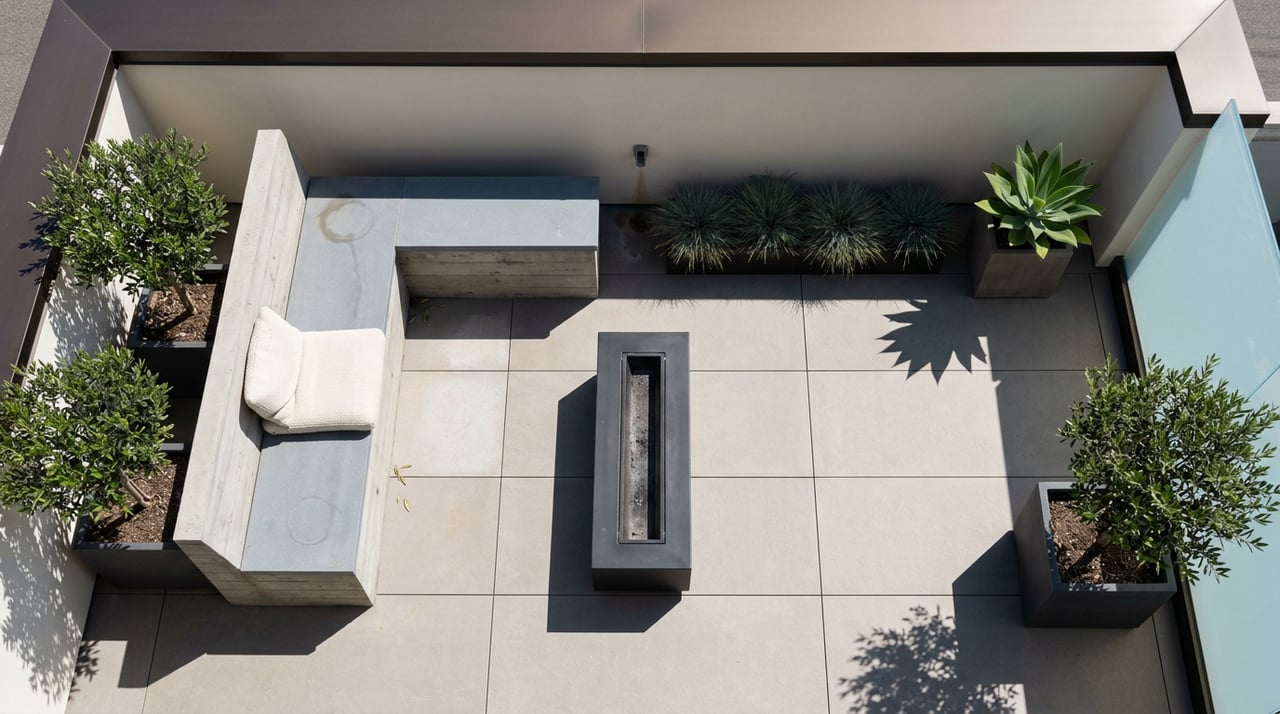
In July 2026, a three-bedroom condominium on the top floor of Sierra Towers sold for $36 million. Nobody had ever slept there.
The unit takes up the entire 32nd floor at 9255 Doheny Road, roughly 7,365 square feet with five full bathrooms and more than 5,400 square feet of wraparound terrace. Real estate investor Evan Metropoulos assembled it by combining two penthouses he bought between 2012 and 2015, then shopped the raw shell for as much as $58 million before pulling it back. It finally sold at a no-reserve auction in 2021 for $17.5 million. The buyers, Chicago philanthropists Dan Fischel and Sylvia Neil, spent years on a renovation with the New York design firm Workshop/APD and then, by their own account, never moved in. One of them told local press they wanted to leave it an untouched jewel for the people who are fortunate enough to be the next owner. Listing agent Linda May put it back on the market that April asking $39.5 million. Three months later it closed at $36 million, or $4,888 per square foot, the highest price per square foot ever recorded for a Los Angeles County condo.
That number is remarkable, and it tells you almost nothing about what a West Hollywood condo actually costs. In an ordinary condo-conversion building elsewhere in the same city, a similarly sized unit can sit for months at a fraction of that per-foot price, not because it lacks the same zip code, but because of two pieces of paperwork that have nothing to do with finishes or square footage.
West Hollywood is 1.9 square miles, and its condo stock behaves like two different asset classes trading under one address. Across a broker-compiled report covering the first eight months of 2025, 195 condos sold across the 90069 and 90046 zip codes at an average of $1,010 per square foot, with half closing in 30 days or less. That is the market most buyers actually encounter. It is not the market Sierra Towers or Pendry Residences trade in.
| Trophy Tier | Everyday Tier | |
|---|---|---|
| Example buildings | Sierra Towers, Pendry Residences | 1960s-70s condo conversions off Crescent Heights and Fountain |
| Recent benchmark | $4,888/sf (July 2026 sale) | ~$1,010/sf average (2025 YTD) |
| What sets the price | Fixed unit count, irreplicable zoning, hotel-grade service | Building condition, HOA health, rental history |
| What can slow a sale | Almost nothing, if marketed correctly | Deferred maintenance, disclosure gaps, financing eligibility |
Pendry Residences, the 40-unit tower at 8420 Sunset built by AECOM Capital and Combined Properties, set its own version of that record in 2022 at roughly $4,848 per square foot before Sierra Towers eclipsed it this year. Both buildings share the same structural advantage: neither can add supply. Sierra Towers was completed in 1965 and cannot be rebuilt under current zoning. Pendry has exactly 40 residences and always will. Scarcity, not livability, is what those prices are actually pricing.
Everything else in West Hollywood's condo stock competes on a completely different axis, and that axis is where most buyers get surprised.
West Hollywood enacted its Rent Stabilization Ordinance in 1985, and it remains one of the strictest local rent control laws in California, a response to a city where roughly 80 percent of residents rent rather than own. The ordinance primarily covers multi-family buildings with two or more units that received a certificate of occupancy before July 1, 1979. What catches buyers off guard is that the coverage doesn't stop cleanly at the apartment-condo line. A condo unit with prior rental history, particularly one where a tenancy began before January 1, 1996, can still fall under the ordinance, and sellers are required to disclose that coverage directly in the purchase agreement.
The financial exposure is real. If a covered unit is currently tenanted and the buyer intends to move in rather than keep renting it out, relocation fees for the outgoing tenant can run anywhere from roughly $7,000 to $25,000 or more, depending on unit size and how long the tenant has lived there. That is not a hypothetical line item. It is a number a buyer needs before writing an offer, confirmed directly with the city's Rent Stabilization Division rather than assumed from the building's age.
Newer construction sidesteps this entirely. Pendry Residences, completed in 2021, falls outside the ordinance's rent-cap provisions by design. That gap in exposure, as much as the finishes, is part of what separates the two tiers of this market.
Rent control isn't the only piece of paperwork reshaping the everyday tier. California's SB326 requires condominium HOAs to visually inspect elevated wood-framed exterior elements, balconies, decks, exterior stairs, and walkways, on a nine-year cycle. The first statewide compliance deadline for condo associations closed on January 1, 2025. A meaningful share of West Hollywood's 1960s and 1970s buildings, the same vintage that dominates the everyday tier, had not completed that inspection by the deadline, which makes it an active disclosure item today rather than a future one.
The consequence lands on financing, not just paperwork. If an inspection turns up needed repairs and a special assessment is expected, even one only discussed in board meeting minutes and not yet formally voted on, it has to be disclosed to a buyer. Conforming lenders can decline to finance a unit in a building carrying an open SB326 item, an underinsured HOA, or a pending assessment. That shrinks the buyer pool down to cash purchasers or buyers using non-conventional financing, and those buyers negotiate accordingly. HOA dues themselves compound the effect: lenders count monthly HOA fees toward a buyer's debt-to-income ratio, so a $750 monthly fee on a $900,000 condo quietly reduces how much purchase price that same buyer can qualify for. In buildings that sit inside the Harper Avenue or Courtyard historic districts, exterior balcony work carries an added design review requirement before permits are even issued, stretching the timeline further.
None of this touches Sierra Towers or Pendry. It is precisely why a $1,010-per-square-foot condo on Crescent Heights and a $4,888-per-square-foot condo on Doheny Road are not variations on the same product. They are two different risk profiles that happen to share a mailing city.
Even within the everyday tier, location does real work. The 90069 zip code, west of La Cienega and closer to the Sunset Strip corridor, commands higher per-square-foot pricing than 90046, which sits east of La Cienega with more mid-century garden-style buildings and more entry-level inventory. At roughly $1,010 per square foot on average, West Hollywood condos remain less expensive than comparable product in Beverly Hills while still carrying a real lifestyle premium over most of the surrounding Westside.
The broader market has also been correcting. As of March 2026, citywide sale prices across all housing types were down roughly 15 percent year over year, with homes taking an average of 107 days to sell, a pullback concentrated in the condo segment and particularly in buildings carrying HOA stress or unresolved maintenance items. By the third week of August 2026, active condo inventory citywide showed a median list price in the mid-$900,000s with an average of roughly 80 days on market, consistent with the 57-to-107-day range the everyday tier has held through most of 2025 and 2026. None of those figures move the trophy tier. Full-floor, low-unit-count buildings with waiting lists don't correct the way a rent-stabilized fourplex conversion does.
If you're comparing West Hollywood to other options on the Westside, the median is the wrong starting question. Here is what actually matters before you sign anything:
Does every West Hollywood condo carry rent control exposure? No. Coverage centers on multi-family buildings that received their certificate of occupancy before July 1, 1979, and reaches condos mainly through prior rental history or pre-1996 tenancies. Buildings completed after that window, including Pendry Residences, fall outside the ordinance's rent-cap provisions.
Is SB326 only a concern for older buildings? The law applies to condo HOAs statewide regardless of age, but the compliance burden falls hardest on 1960s and 1970s buildings that still carry their original wood-framed balconies and hadn't completed their first mandated inspection by the January 2025 deadline.
Is the trophy tier a better investment than the rest of the market? That depends entirely on what the buyer wants. Scarcity pricing in buildings like Sierra Towers reflects a genuine ceiling on supply that the rest of the condo stock doesn't share. Those units trade on different logic and shouldn't be used as comps for anything outside their own tier, and vice versa.
None of this means West Hollywood is a market to avoid. It means the number on the listing sheet is doing less work than it looks like it's doing. Nancy Ellin Realty Group spends most of its time in West Hollywood in the tier where scarcity, not paperwork, sets the price, buildings like Pendry Residences where the small unit count and hotel-grade infrastructure make the math closer to Sierra Towers than to an ordinary rent-stabilized conversion elsewhere in the city. If you're weighing West Hollywood against the rest of the Westside and want a straight read on which side of that split a specific building or unit actually sits on, that conversation is worth having before you write an offer. Request a Private Consultation.
Stay up to date on the latest real estate trends.
Whether you are relocating or an LA native, Nancy's knowledge, expertise and relationships will help buy or sell your home in Beverly Hills or Bel Air. Her full service approach, hand holding every step of the process while maintaining the highest level of attention to detail.