Holmby Hills Real Estate: What Days on Market Really Mean
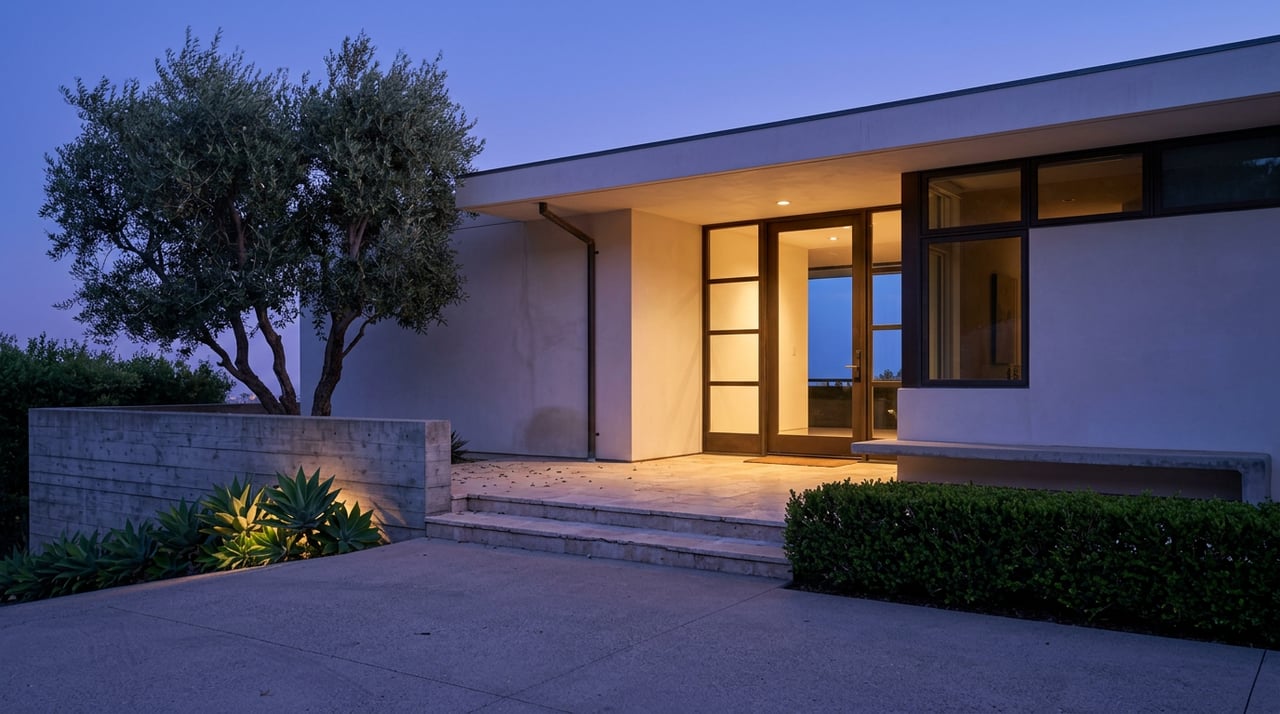
In December 2025, a brutalist compound on Mapleton Drive went up for sale at $48 million. By March, it had been quietly pulled from the market. In July, it reappeared at $38.5 million, a cut of nearly $10 million. To anyone comparing neighborhoods off a portal search, that kind of swing looks like a listing in trouble, or a seller who badly misjudged the market.
Neither is true. The house is in Holmby Hills, and in Holmby Hills, that price history is closer to normal than exceptional.
Start with what the neighborhood actually does in a given month. In the three months ending March 2026, the median sale price in Holmby Hills was $6.9 million, up 8.7 percent from the same period a year earlier. The average home took 186 days to sell, down from 209 days the year before. Only three homes sold that March.
Three sales is not a market in the way a subdivision with hundreds of annual transactions is a market. It is a small, irregular sample where a single eccentric estate, a single motivated seller, or a single stalled negotiation can swing the whole neighborhood's average by weeks. A 186-day average days-on-market figure sounds sluggish next to a normal residential corridor. In a neighborhood that trades three houses a month, it barely qualifies as a trend, let alone a warning sign about any specific property.
Pull the actual case files from this year and the pattern gets clearer. Every one of these is a real Holmby Hills address with a real price history, not a hypothetical.
Read across those five, and the common thread isn't weakness. It's that every one of these properties is architecturally singular enough that there's no real comp to price against. A three-bedroom in a tract development has dozens of recent sales to anchor an offer. A 1927 Gothic Tudor or a gutted 1939 Georgian has none. The asking price can adjust over months until it lands somewhere a buyer will actually sign.
A neighborhood that sells three houses a month has limited pricing data, and every sale is unique enough to argue with.
Here's the part that complicates the easy story about a soft luxury market. While the $20 to $50 million tier ground through cuts, the very top of Holmby Hills closed without incident. The Manor on South Mapleton Drive, the largest private residence in Los Angeles County, sold in 2025 for $110 million. The same year, an estate on Nimes Road just over the border in Bel-Air also closed at $110 million.
Those deals didn't sit for a year absorbing price cuts. They moved through private channels, to specific buyers, at numbers that never touched the public negotiation theater the $30 to $50 million tier goes through. The bifurcation matters for anyone actually shopping this range: the $20 to $50 million segment is where sellers test the market in public and buyers watch the cuts happen in real time. Above that, deals increasingly happen through relationships before a public number is ever attached.
If you're comparing Holmby Hills against Bel Air or Beverly Hills and trying to figure out whether a long-listed property is a bargain or a warning, the days-on-market column on a portal tells you almost nothing by itself. The price history does.
Look at the gap between the original ask and the current one. A 10 to 15 percent reduction after six months reflects a recalibration of the asking price. A 30 to 40 percent reduction, like the Candy estate's drop from $85 million to $58 million, shows a much larger adjustment, though it doesn't establish what the house is actually worth.
Look at the pace of the cuts too. A single large reduction after a long, quiet stretch, the way the Bellagio Road estate moved from $37.5 million to $34.5 million after roughly a year, is a different pricing pattern from a rapid series of smaller cuts, the way 111 N. Mapleton moved from $48 million in 2021 down through several intermediate prices before landing near $25 million. Neither pattern alone tells you the seller's urgency or what feedback came from showings.
And look at each property's history. The Wearstler-designed Georgian, for example, has a distinct route to market. The Harlow estate's long gap between sales is part of its price history.
One more mechanic worth knowing before any offer gets written. Los Angeles has a Measure ULA transfer tax. According to Luxury Property, for transactions closing after June 30, 2026, the city's updated thresholds assess a 4 percent tax on the portion of a sale between $5.4 million and $10.9 million, and 5.5 percent on anything above $10.9 million. At $20 million and up, the tax is large enough that both sides factor it into where the final number lands. A seller who has already absorbed a $10 million price cut is doing that math against a tax bill that gets bigger, not smaller, as the sale price climbs. That's part of why patient sellers in this tier sometimes hold a higher number longer than the market data would suggest they should.
None of this means Holmby Hills is a bad place to buy or an unusually risky one to sell into. It means the signals that work in a normal market, days on market, list-to-sale ratio, don't translate cleanly to a neighborhood where the entire annual transaction count could fit in a single subdivision's spring selling season. The properties that actually sell here do so on their own architectural merits, to a buyer who wanted exactly that house, at a number that took as long as it needed to take.
If a Holmby Hills listing has been cut twice, does that mean I can lowball the third offer? Not automatically. A repeated cut tells you the seller has adjusted their expectations, not that they've abandoned them. The right move is to look at how far the current price sits from the two most architecturally comparable recent sales, then build an offer from that gap rather than from the size of the previous cuts.
How long should I actually expect to wait if I list here? Based on the pattern across this year's listings, plan for months rather than weeks unless the property is unusually turnkey or priced conservatively from day one. The 186-day neighborhood average is a reasonable planning figure, but a home with a genuine architectural pedigree and a patient seller can easily run longer.
Holmby Hills rewards buyers and sellers who read the full price history instead of the headline number, and that kind of reading is exactly where a second set of experienced eyes earns its place. Nancy Ellin Realty Group works this stretch of the Westside alongside Bel Air and Beverly Hills every week. If you're weighing a purchase or a sale in this range, Request a Private Consultation before you write the first number down.
This article is general information, not legal, tax or financial advice. Consult a qualified professional about your situation.
Stay up to date on the latest real estate trends.
Whether you are relocating or an LA native, Nancy's knowledge, expertise and relationships will help buy or sell your home in Beverly Hills or Bel Air. Her full service approach, hand holding every step of the process while maintaining the highest level of attention to detail.